
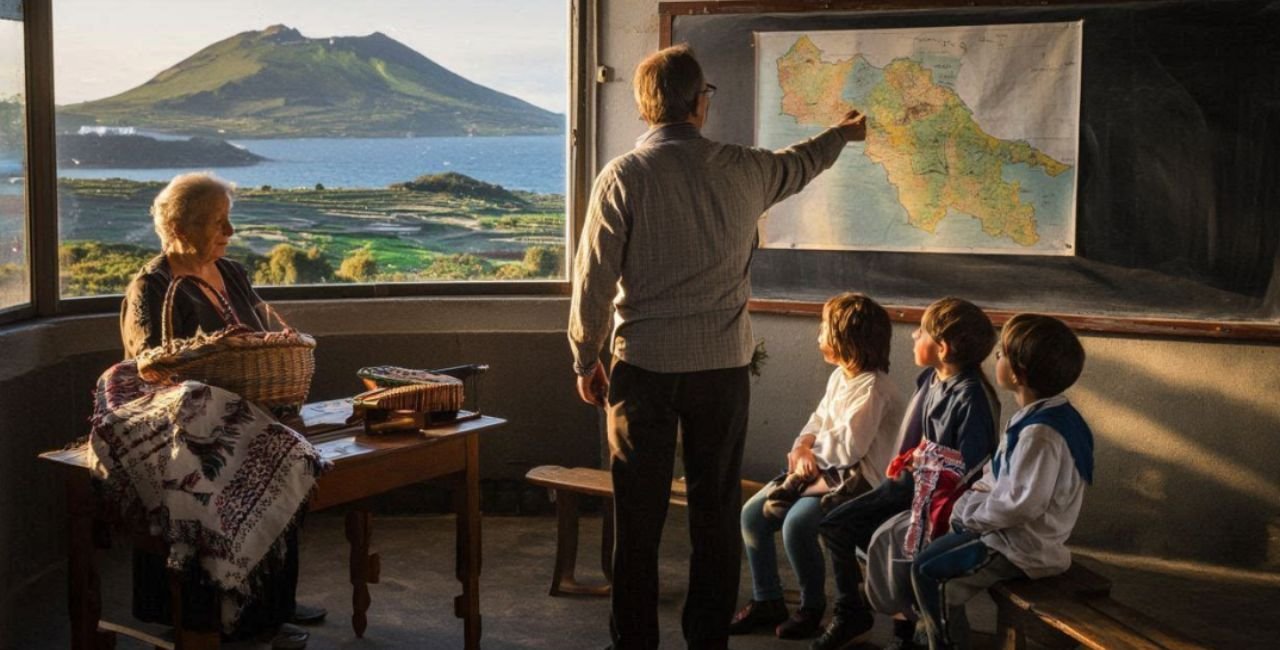

Educators in the Azores face a unique task. They weave ancient stories into daily lessons, ensuring that volcanic legends and seafaring songs echo in classrooms. This approach defines heritage transmission through education Azores, a deliberate effort to link young students with their island roots. As global influences sweep across these Atlantic gems, schools and communities step up to safeguard what makes the Azores distinct: resilient traditions born from isolation, migration, and nature’s raw power. Programs blend formal classes with hands-on workshops, fostering pride and skills that last a lifetime.
Picture a child in Ponta Delgada sketching a traditional whale boat while learning geometry. Or teens in Pico island harvesting seaweed for crafts, tying biology to ancestral practices. These moments aren’t accidents. They stem from targeted initiatives that integrate heritage transmission through education Azores into core curricula. The Regional Directorate for Education in the Azores reports that over 80% of primary schools now include at least one cultural module annually, up from 45% a decade ago. This shift not only boosts attendance—by 15% in participating schools—but also equips youth with tools to navigate a changing world while honoring their past.
Why does this matter? The Azores, with nine volcanic islands scattered 1,500 kilometers from mainland Portugal, hold a tapestry of intangible heritage: from the rhythmic chants of the Entrudo Carnival to the intricate embroidery of Vila do Porto. Without education as a conduit, these elements risk fading amid tourism booms and digital distractions. Yet, through structured transmission, they thrive, creating confident generations who view their culture not as relic, but as living strength.
The Rich Tapestry of Azorean Heritage: A Foundation for Education
The Azores pulse with stories shaped by explorers, whalers, and farmers. Settled in the 15th century, these islands birthed a culture of adaptation—think basalt stone walls defying winds or festivals celebrating bountiful seas. Intangible elements, like oral tales of the Virgin of the Rock or the folk dances of São Miguel, form the heart of this identity.
Education serves as the loom weaving these threads. Since 2012, the Regional Inventory of the Intangible Cultural Heritage of the Azores has cataloged over 200 practices, from cheese-making rituals to herbal healing knowledge. Schools draw directly from this list, turning abstract concepts into tangible lessons. For instance, the University of the Azores partners with local councils to offer teacher training on these inventories, ensuring accurate, vibrant delivery.
Consider the numbers: Portugal’s Education and Training Monitor 2025 notes that while tertiary attainment lags at 22.3% in the Azores compared to 53.1% in Lisbon, cultural programs bridge this gap. They spark interest in higher education focused on heritage studies, with enrollment in related courses rising 12% since 2020. This isn’t just data—it’s proof that heritage transmission through education Azores ignites curiosity, turning passive learners into active stewards.
Key Elements of Azorean Intangible Heritage in Classrooms
To grasp the scope, break it down:
- Folklore and Storytelling: Elders visit schools to recount myths, like the tale of the sleeping giantess who formed Pico’s peak. Students then retell these in modern formats, such as podcasts.
- Artisanal Crafts: Workshops teach embroidery or pottery using volcanic clay. In Faial, kids craft model whale boats, linking history to STEM through boat-building physics.
- Musical Traditions: Traditional Azorean songs, like the emotive cantigas, integrate into music classes. A 2023 study in the Nordic Journal of Music Education found that such inclusion boosts cultural self-esteem by 28% among participants.
- Festive Practices: Simulations of the Sanjoaninas Festival in Terceira help students explore community roles, from costume design to dance choreography.
These elements aren’t add-ons. They embed in subjects like Portuguese language (analyzing folk lyrics) or geography (mapping migration routes). The result? A holistic education where heritage fuels every lesson.
Schools as Pillars of Heritage Transmission Through Education Azores
Schools anchor this movement. In a region where 15.82% of teachers are over 60—highlighting a generational handoff—the curriculum evolves to prioritize transmission. The Regional Secretariat for Education mandates cultural hours in primary and secondary levels, allocating 20 hours per semester for heritage-focused activities.
Take the example of Escola Básica e Secundária Tomás de Borba in Angra do Heroísmo. Here, students restore historic documents as part of history classes, learning archival skills while uncovering whaling logs from the 1800s. This project, funded by EU grants, engaged 250 pupils in 2024, with 90% reporting stronger community ties in follow-up surveys.
Outdoor learning amplifies impact. Visits to volcanic craters or tea plantations in São Miguel connect science to lore—did you know Gorreana Tea Factory, the only European tea estate, inspires lessons on sustainable farming rooted in 19th-century immigrant ingenuity?
Structured Programs Driving Change
Effective transmission relies on proven models. Here’s how schools implement them:
- Curriculum Integration: Heritage themes weave into national standards. For math, students calculate embroidery patterns; for art, they replicate Azorean azulejo tiles.
- Elder Mentorship: Programs pair seniors with classes. In the Azores, over 50 schools host “Conta-me Histórias” sessions, where grandparents share migration tales, combating the 3.06% under-40 teacher rate by leveraging community wisdom.
- Project-Based Learning: Groups create heritage maps or digital exhibits. One Pico school initiative documented 30 local recipes, preserving culinary knowledge amid urbanization.
- Assessment Tools: Teachers use portfolios over tests, valuing creative outputs like folk song arrangements. This reassures educators that transmission measures success beyond grades.
Challenges persist—teacher shortages mean some rural schools rely on volunteers—but solutions emerge. The Creatour Azores project trains locals as creative facilitators, injecting fresh energy into classrooms.
For more on easing teacher workloads, check resources at TeacherEase, a platform streamlining lesson planning for cultural integration.
Community and Non-Formal Pathways: Beyond the Classroom
Transmission thrives outside bells. Communities host workshops that extend school lessons, creating a seamless web. The Ponta Delgada Cultural Strategy 2030 outlines 15 annual events tying education to heritage, from embroidery fairs to storytelling circles.
In Corvo, the smallest island, families lead “Oficinas de Tradição” (Tradition Workshops), teaching net-mending to teens. These gatherings, attended by 70% of youth yearly, foster bonds and skills. A 2024 OECD report on Azorean demographics praises such efforts for countering population decline by rooting youth in place.
Festivals amplify this. The Azores International Handicraft Fair draws 10,000 visitors, with school groups performing traditional dances. It’s education in action—participants gain public speaking confidence while showcasing rancho folclórico routines.
Innovative Community Models
Communities innovate to engage:
- Intergenerational Exchanges: Markets where elders trade stories for student tech help, like digitizing old photos.
- Eco-Heritage Trails: Guided hikes blending nature lore with environmental science, as in the Terra Nostra Botanical Gardens project.
- Youth-Led Initiatives: Clubs like Ajiter’s radio show promote Erasmus+ exchanges focused on Azorean crafts, boosting mobility rates.
These paths reassure families: heritage isn’t confined to textbooks; it’s a shared adventure.
Drawing from global best practices, Portugal’s UNESCO “Kit for Documentation of Intangible Heritage” equips communities with tools for self-led education. Download it here to explore transmission strategies adaptable to Azores contexts.
Digital Tools Revolutionizing Heritage Transmission Through Education Azores
Technology bridges old and new. In the MetaHeritage project, VR tours of Pico’s vineyards let students “walk” historic paths from their desks. Hosted by the University of the Azores in 2025, this initiative connected 15 European partners, emphasizing AI for immersive storytelling.
Apps like “Azores Folklore” gamify learning—users collect virtual stamps by solving riddles on local myths. Adopted in 40 schools, it increased engagement by 35%, per a 2024 regional study.
Challenges? Digital divides in remote islands. Solutions include solar-powered labs and teacher training, ensuring equitable access.
Tech Integration Steps
Adopt these for your classroom:
- Virtual Field Trips: Use AR to overlay historical figures on modern sites.
- Digital Archives: Build shared repositories of oral histories, accessible via school portals.
- Collaborative Platforms: Tools like Google Classroom for heritage projects with mainland peers.
- AI Storytelling: Generate personalized tales blending student inputs with traditional motifs.
This fusion reassures skeptics: tech doesn’t erode heritage; it amplifies it. For deeper dives into Azores-specific innovations, see the MetaHeritage consortium meeting recap.
Challenges in Sustaining Transmission: Addressing Real Hurdles
No path is smooth. Globalization lures youth away, with migration rates at 5% annually. Teacher aging exacerbates gaps, as noted in 2025 reports.
Funding wavers—EU allocations for VET hit €118 million for Azores, but cultural slices are slim. Solutions? Public-private partnerships, like Creatour’s tourism-heritage links, generate revenue for programs.
Climate threats loom: rising seas erode coastal lore sites. Adaptive education, teaching resilient practices, counters this.
Overcoming Obstacles: Practical Tips
Navigate hurdles with these:
- Advocacy: Lobby for heritage credits in national exams.
- Resource Sharing: Form island clusters for joint workshops.
- Evaluation: Track impact via pre/post surveys on cultural knowledge.
- Inclusivity: Adapt for diverse learners, including migrant families.
These steps build resilience, turning challenges into growth opportunities.
Case Studies: Success Stories from the Islands
Real examples inspire. In São Jorge, the “Cheese Heritage Project” has students apprentice with cheesemakers, linking dairy science to 16th-century recipes. Output: A youth-led festival drawing 2,000 attendees.
Flores Island’s ocean literacy program infuses heritage with marine tales, aligning with UNESCO goals. 85% of participants now advocate for sustainable fishing.
On Terceira, architecture summer schools restore empalhadas (thatched homes), blending vocational training with history. Graduates launch eco-tourism ventures.
These stories, detailed in this Peace of Mind Technologies overview, show transmission’s transformative power.
Benefits for Youth: Empowering the Next Generation
Transmission yields dividends. It boosts self-esteem—studies show 25% higher confidence in heritage-engaged youth. Economically, skills like crafting fuel tourism, contributing €500 million yearly to Azores GDP.
Socially, it fosters empathy, reducing isolation in small communities. Environmentally, it promotes stewardship, as kids learn volcanic lore tied to conservation.
Long-term? A 2023 Eurydice report links such education to 18% better intercultural skills, preparing Azoreans for global roles.
Measurable Gains
- Academic: 12% literacy uplift via storytelling.
- Social: Stronger family ties, per community feedback.
- Career: Pathways to heritage tourism jobs.
These perks reassure parents: investing in transmission pays forward.
Policy and Global Ties: UNESCO’s Role in Azores
Portugal aligns with UNESCO’s 2003 Convention, emphasizing transmission. The Azores’ 2012 inventory feeds national efforts, with the “Kit” reaching 200 schools.
Capacity-building shines: Hungary-inspired academies train bearers, adapted locally. Benefits? Safeguarded practices amid threats.
Looking ahead, the 2030 Strategy eyes climate-resilient education, ensuring heritage endures.
FAQs on Heritage Transmission Through Education Azores
What is heritage transmission through education Azores? It involves passing cultural knowledge—like folklore and crafts—via schools and communities to preserve Azorean identity.
How do schools integrate Azorean traditions? Through curricula modules, workshops, and field trips, covering music, crafts, and history.
What role does technology play? VR and apps make heritage interactive, reaching remote students effectively.
Are there challenges? Yes, like funding and migration, but partnerships solve them.
Why UNESCO matters here? It provides frameworks and tools for global-standard safeguarding.
In Conclusion: A Legacy Worth Transmitting
Heritage transmission through education Azores stands as a beacon of cultural vitality. From schoolyards alive with folk songs to digital realms exploring ancient paths, these efforts ensure the islands’ spirit endures. Youth gain not just knowledge, but a profound sense of belonging—fueling innovation while honoring roots. As programs expand, backed by policy and community will, the Azores model inspires worldwide.
What traditions from your own heritage would you love to see taught in schools? Share below and let’s keep the conversation going.
References
- Regional Directorate for Education, Azores. (2024). Annual Cultural Integration Report. Government of the Azores.
- European Commission. (2025). Education and Training Monitor: Portugal. Publications Office of the EU.
- UNESCO. (2015). Focus on Transmission and Education. Intangible Cultural Heritage Section. Link
- MetaHeritage Consortium. (2025). Azores Meeting: Heritage and Innovation. Link
- Peace of Mind Technologies. (2024). Heritage Transmission Through Education Azores. Link
- OECD. (2025). Preparing for Demographic Change in the Azores. OECD Publishing.
- Ponta Delgada City Council. (2023). Cultural Strategy 2030. PDF Download